Mood Music

Today I found an old CD (remember those?), called Beethoven Naturally.  These eight songs have gotten me through some rough seas.  Music is the most wonderful (natural) way to calm me down or excite me (we all have that playlist, right?).  When I am manic, I automatically tune into so many sounds and sights at once.  I’m unable to block out unwanted stimuli.  It is basically all or all.  This is usually what leads to irritation for me.  When I learned that I can put some headphones on and listen to a beautiful piece of music, I felt saved.  It narrows my focus to those beautiful notes.   I also like to listen to nature sounds to soothe my soul (e.g., waves, streams, rain – mostly water).  When I was in my twenties and discovered this treatment, I took my mp3 player with me everywhere until my world was turned right side up again.  Now, I always have prescription playlists at the ready, to help me simmer down or perk up.

Some of my magical music (for ups and downs):

  • Phantom of the Opera
  • Mozart and Beethoven
  • Neil Diamond
  • What a Wonderful World (Louis Armstrong)
  • Beauty in the World (Macy Gray) – on a loop after Mom died
  • Say it to Me Now (Glen Hansard)
  • Janis Joplin
  • If You Want to Sing Out, Sing Out (Cat Stevens)

What songs are on your prescription playlist?

violin-and-notes-wallpapers_17591_2560x1600

source of picture: http://www.familypianoco.com/wp-content/uploads/2012/06/violin-and-notes-wallpapers_17591_2560x1600.jpg

Breathe

It was a stressful week professionally.  I used my new Iphone watch to remind myself to breathe every time I looked at it.  Surprisingly, that small thing helped quite a bit.  This weekend, I had some pajama time, downloaded LightRoom and started a class on it, and went for a much needed walk.    Starting tomorrow I have to complete a big project in three days.  I will probably leave the reminder to breathe and a few happy emoticons on my watch for next week, too.

I took my clonazepam for sleep each night, and on the most stressful night, I took two.  Self medication – I went out drinking Friday night with some friends.  It was fun, but recovery takes longer the older I get.

In a new show that I’m loving (Jessica Jones), her boyfriend says something stereotypical and negative about mentally ill people.  I don’t remember the exact quote, but it felt like a slap in the face.  I think it surprised me, because the writing is brilliant otherwise.

I read that last month, multiple celebrities came out of the mental health closet.  I hope that their messages are heard, and people know they aren’t alone.

I’m feeling a little disjointed and under the weather, so I’m calling it for tonight.

Being Alone and an Unquiet Mind

According to a NAMI, “2.6% of Americans live with bipolar disorder”*.

When I was first diagnosed, I felt so alone.  Being a sixteen-year-old girl coming out of a psychiatric hospital was terrifying.  I was already struggling to survive high school like everyone else was.  I had just started driving, had a new boyfriend, and my parents had recently divorced.  Now I was taking medication for the rest of my life to  stave off psychotic mania and possibly erase who I really was.  I told most people some vague story about  being sick, but I was fine now.

I don’t think I ever took the time to grieve the loss of normalcy.  I went to therapy, but  I didn’t attend any support groups, the internet had not caught on yet, and few celebrities had come out of the mental disorder closet.  As far as I knew, there was no one else like me outside of institutions and scary movies.

It wasn’t until I read Dr. Kay Redfield Jamison’s “An Unquiet Mind” (after I graduated high school), that I knew that you can have this disorder and be a doctor and writer.  She literally wrote the book on it (“Manic Depressive Illness”).  She gave me hope to succeed despite the disorder.  Even more wonderful, she tempted me with the thought I can succeed because of it (“Touched by Fire”).   Her books were life changing for me.

*https://www.nami.org/NAccoAMI/media/NAMI-Media/Infographics/GeneralMHFacts.pdf

sunmoon

Better Living through Chemistry

Yesterday, I saw an older, disheveled man running through the streets in a cape.  He was skin and bones, and he looked like he’d been running for days.  He looked like mania feels.  I always heard growing up, “there but for the grace of God, go I.”  That just saddens me now.  Why would a god choose for some people to suffer and others to be able to afford medication and treatment?  There but for my family, friends, ability to go to school and get a job, and afford medications, go I.  I also don’t know that I won’t be that person some day; nothing is permanent, and the statistics are quite dreary.

I’ve been taking lithium since I was diagnosed at sixteen.  Sometimes, it seems crazy to take an element that scientists accidentally discovered could regulate moods.  Last time I researched it, they still didn’t even know how it works.  When I worked in mental health, my manager told me that anyone who prescribes lithium for a teenager is a monster.  (Now that is probably a blog post on its own; dealing with stigma while working in mental health.)  I’m grateful that there is a substance that can keep me on an even keel and live what I believe is a good life.

I used to think Lithium was all there was, and I would still have manic episodes every couple years and live in constant fear of being happy.  Until two episodes ago, a psychiatrist suggested clonazepam.  Now, when I’m overly stressed and feeling that terrifying electrified feeling in my body and brain, I take two clonazepam and give myself a time out.  I usually tell my husband that I’m starting to feel keyed up, and he supports my efforts to take it down a notch.    I also take it to sleep at night.  As I’ve mentioned, sleep is my number one defense against mania.  So, perhaps, I’m just addicted to more expensive drugs, but they give me the piece of mind to celebrate life’s joys with less fear.

DSC00002

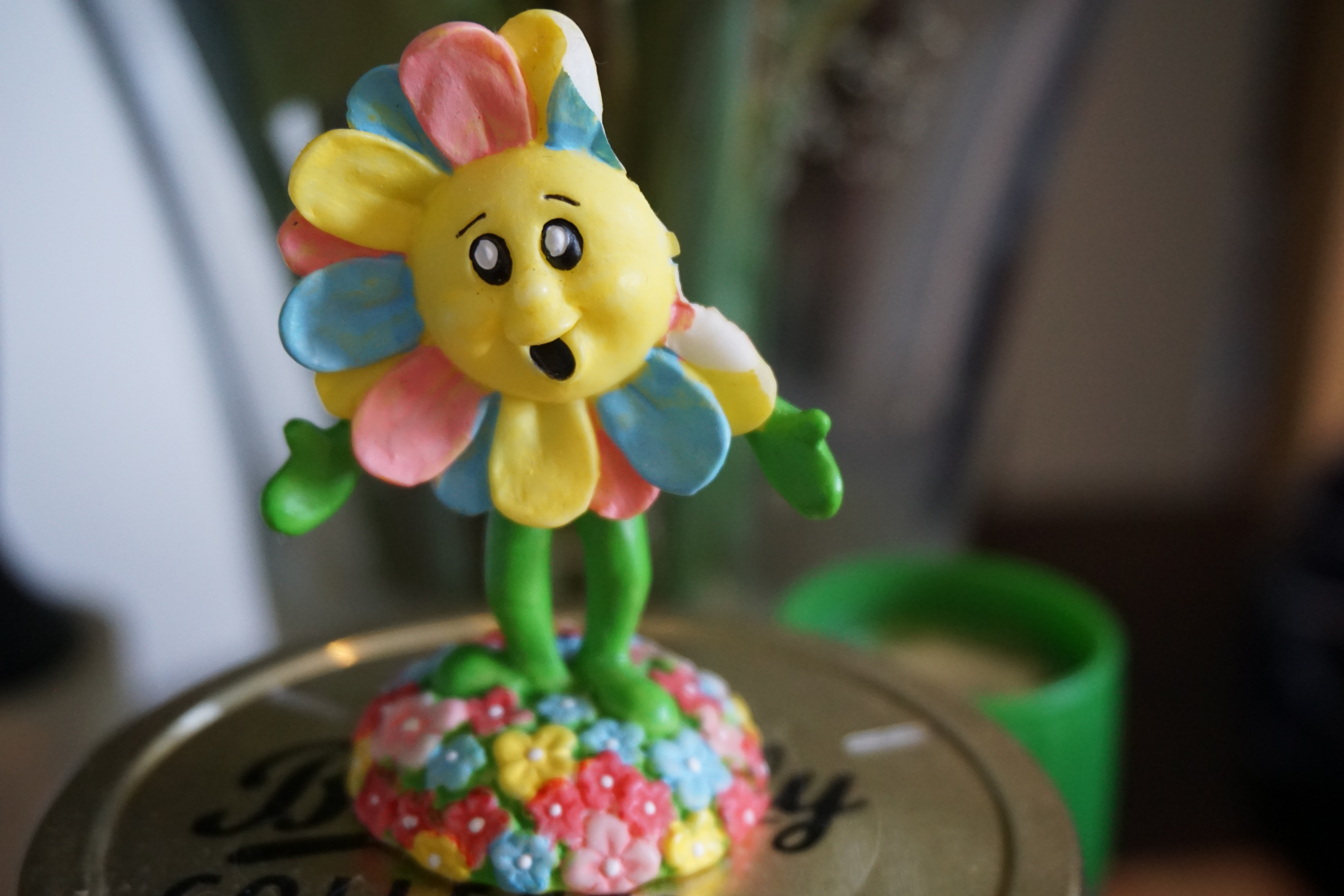
This was sent to me by my brother, it reminded him of Wonderfalls. Still one of my favorite portrayals of psychosis in the media.